
Plants
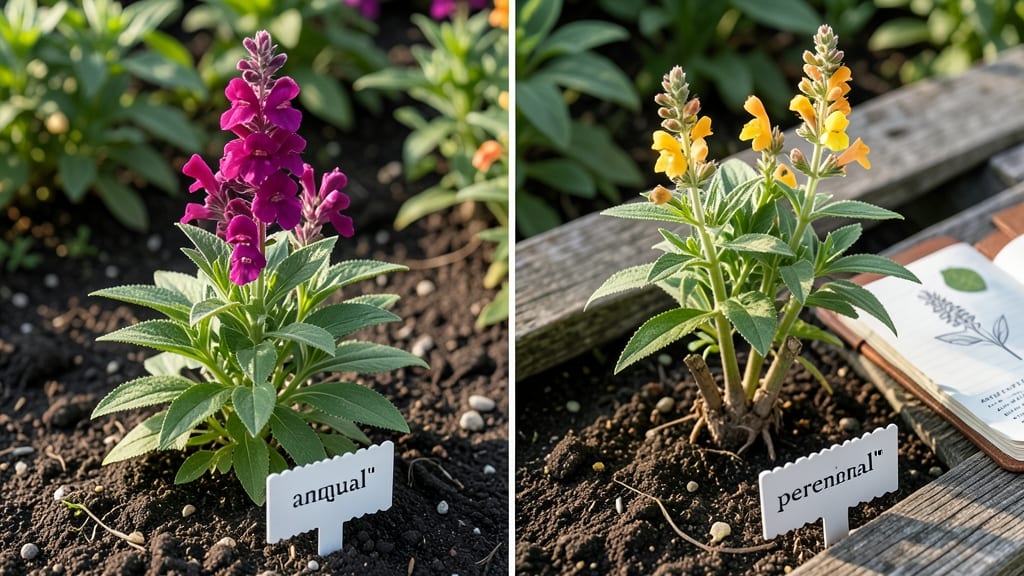
Snapdragons are perennials in frost-free zones because their thick, bulb-like corms store energy and regrow each spring. In colder regions, they typically die back annually unless you take protective steps.
These flowering plants thrive as perennials where winter temperatures stay above 20°F, thanks to their specialized underground storage organs. 🌱 The corms act like biological batteries, holding enough nutrients to fuel new growth when conditions improve.
In colder climates, gardeners often treat them as annuals unless they mulch heavily or dig up and store the corms indoors during winter months.
What sets snapdragons apart is their ability to self-regenerate from these corms, which can persist in the soil for years if conditions remain favorable. This makes them a rewarding choice for gardeners willing to adapt their growing approach based on local climate challenges.
💡 In This Article
- How Snapdragon Corms Enable Perennial Growth
- Growing Snapdragons as Perennials in Cold Climates
How snapdragon corms enable perennial growth
Snapdragon perennials owe their persistence to their specialized corms—thick, bulb-like storage organs that function like nature's energy reserves. These corms store carbohydrates, proteins, and water, allowing the plant to survive harsh conditions while remaining dormant.
Unlike true bulbs (like tulips), snapdragon corms are actually modified stems with a dense, fleshy base that can weigh between 1/4 to 1/2 ounce when mature. This weight-to-energy ratio is crucial for their survival, as they need sufficient reserves to regenerate shoots when temperatures rise above 50°F in spring.
The corm's structure is fascinating: its outer layer is tough and protective, while the inner tissue contains specialized cells that convert stored starches into sugars during regrowth. This process begins when soil temperatures reach 55-60°F, triggering enzymatic activity that breaks down complex carbohydrates into usable energy.
The corm also produces new buds at its base, which will develop into the season's flowering stems. In ideal conditions, a single corm can produce 2-4 new shoots annually, creating dense clumps over time.
Soil conditions play a critical role in this cycle. Well-draining soil prevents corm rot, while fertile loam provides the nutrients needed for robust storage. Snapdragons thrive in soil with a pH of 6.0-7.0, where microbial activity helps break down organic matter into forms the corms can absorb.
The corm's ability to regenerate depends entirely on these stored resources—if the plant is overwatered or deprived of sunlight, the corm may not accumulate enough reserves to survive the next dormant period.
Temperature is the defining factor in whether snapdragons behave as perennials. In frost-free zones (USDA zones 8-11), corms remain active year-round, producing continuous blooms. However, when nighttime temperatures drop below 20°F, the corms enter a protective dormancy.
This chilling requirement actually helps break their dormancy in spring—similar to how many fruit trees need winter cold to flower properly. The corm's cellular structure adjusts by producing antifreeze proteins that prevent ice crystal formation, allowing it to survive temperatures as low as 15°F for short periods.
What most gardeners don't realize is how quickly corms can degrade if conditions aren't right. After 3-5 years in the ground, snapdragon corms often become less productive as their stored energy diminishes.
This is why many gardeners divide and replant them every few seasons—a process that rejuvenates the corms by creating smaller, more vigorous storage organs. The corm's lifespan can be extended indefinitely with proper care, but its annual growth cycle remains tied to these biological limitations.
Consider this comparison: A healthy snapdragon corm in optimal conditions can produce flowers for 6-8 weeks each season, while a neglected one may struggle to break dormancy at all.
The difference often comes down to just a few degrees of winter protection or an inch of proper mulch—small factors with huge consequences for perennial performance. 🌿