
Vegetables
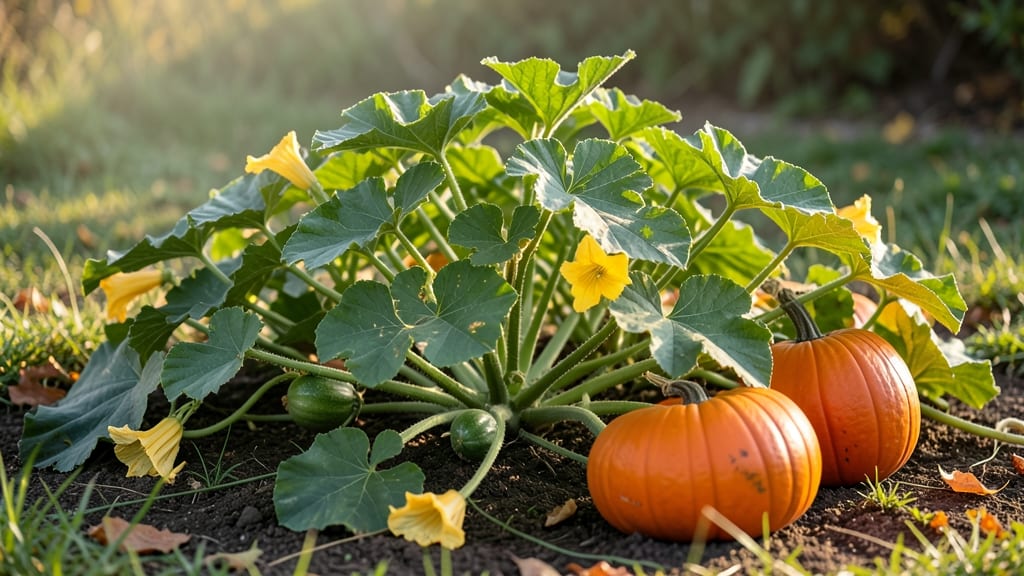
Pumpkins are not perennial—they complete their life cycle in one growing season, dying back after fruiting, though their vines may linger in frost-free areas. This annual or short-lived habit means you'll need to replant them yearly, though some varieties show semi-perennial tendencies in mild climates.
Pumpkins prioritize fruit production over survival, redirecting all their energy into growing those massive orbs we love. 🌱 Once they've finished fruiting, the vines naturally decline—especially when temperatures drop. True perennials like asparagus or strawberries regrow from the same root system year after year, but pumpkins don't have that ability.
In warmer regions, you might see vines persist into winter, but true regrowth is rare without human intervention like greenhouse protection.
What's fascinating is how climate plays a role—some tropical pumpkin varieties in Florida or Hawaii might show semi-perennial behavior, producing smaller fruits year-round. This happens because they're not exposed to the hard freezes that trigger dormancy in northern climates.
For most gardeners, though, treating pumpkins as annuals is the practical approach, especially if you want reliable, large harvests.
💡 In This Article
- Why Pumpkins Die Back After Harvest
- How to Extend Pumpkin Growth in Warm Climates
Why pumpkins die back after harvest
Pumpkins follow a biological strategy where they allocate nearly all their energy to fruit production rather than vegetative survival.
This is called reproductive senescence, where the plant's resources shift from leaf and vine growth to developing seeds and flesh. 🌱 Once the fruit matures—typically in 90-120 days—the vine begins to yellow and wither because the plant has essentially "spent itself" on reproduction.
This is different from true perennials like asparagus, which store energy in rhizomes to regrow annually.
The process is triggered by a combination of factors: shortening daylight hours (12 hours or less of sunlight), dropping temperatures below 50°F, and hormonal changes that signal the end of the growing season. Frost acts as the final catalyst, causing cellular damage that accelerates vine death.
In contrast, semi-perennial squash varieties like Cucurbita pepo (e.g., some winter squash) can persist through mild winters because their vines are more cold-tolerant, though they still won't regrow robustly without intervention.
What makes pumpkins unique is their determinate growth habit—they grow to a fixed size, then stop extending their vines. This contrasts with indeterminate plants like zucchini, which keep producing leaves and flowers until frost.
The energy shift happens at the molecular level: chlorophyll breaks down, and nutrients are transported from leaves to the developing fruit, leaving the vine without the resources to survive. 💫 This is why you'll rarely see pumpkin vines regrow naturally in temperate climates.
For comparison, true perennials like strawberries or artichokes have specialized underground structures (corms, rhizomes) that store carbohydrates and water. Pumpkins lack these storage organs, making them dependent on annual replanting.
Even in frost-free zones, their vines may persist, but they won't produce new growth without human assistance like greenhouse protection or soil warming.
One exception is tropical pumpkin varieties, such as Cucurbita moschata in Hawaii, which can produce smaller fruits year-round due to consistent warm temperatures. However, these plants still undergo seasonal slowdowns during cooler periods, though not the same dramatic dieback seen in northern climates.
The key difference is the absence of frost—pumpkins aren't truly perennial, but their growth patterns can mimic semi-perennial behavior under ideal conditions.