
Plants
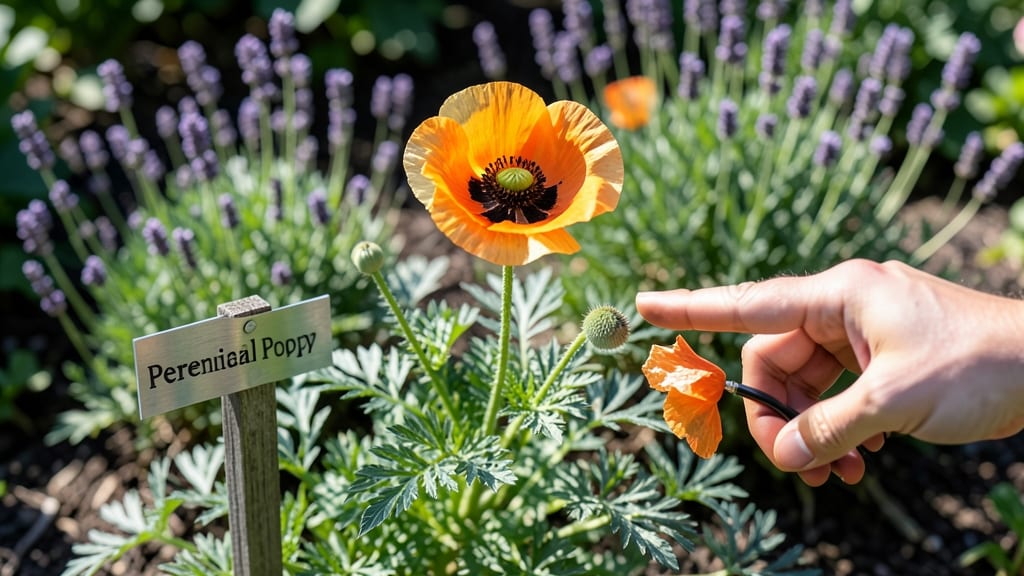
Poppies are not true perennials—they typically bloom once and die back annually, though some varieties like the Iceland poppy may self-seed prolifically. Most garden poppies return each year through reseeding rather than persistent roots.
Poppies follow a one-season life cycle where they allocate energy to flowering and seed production instead of root survival. 🌱 This explains why many varieties disappear after blooming—once they've set seed, their above-ground parts wither away.
The few exceptions, like Iceland poppies, thrive because they produce seeds that sprout naturally the following year, creating a self-sustaining cycle. Understanding this helps gardeners manage expectations and plan for seasonal regrowth through strategic planting and soil preparation.
For gardeners aiming to enjoy poppies year after year, the key lies in encouraging reseeding rather than relying on perennial roots. Allowing seed pods to mature and dry on the plant ensures next year's crop, while deadheading spent blooms can redirect energy to root development in some varieties.
The Oriental poppy, for instance, behaves more like a short-lived perennial, often lasting 2-3 years before needing replacement. Cold-hardy varieties like the Shirley poppy can overwinter in zones 3-9 with proper mulching, making them more reliable annuals.
💡 In This Article
- Why Most Poppies Die Back After Flowering
- How to Encourage Poppies to Return Year After Year
Why most poppies die back after flowering
Poppies follow a monocarpic life cycle, meaning they devote nearly all their energy to a single reproductive event—flowering and seed production—rather than maintaining perennial roots.
This is especially true for species like the California poppy (Eschscholzia californica), which develops a deep taproot that stores nutrients for early growth but doesn’t persist through winter.
Once the plant blooms, its energy reserves are exhausted, causing the foliage to yellow and die back, leaving only the seed pods behind.
The taproot system is the root cause (pun intended) of this behavior.
Unlike perennials that develop fibrous root networks to survive harsh seasons, poppies rely on their single, thick root to fuel rapid growth during their short lifespan. 🌱 For example, an Iceland poppy (Papaver nudicaule) can grow up to 12 inches tall in just 4-6 weeks before flowering, then collapse entirely after seed dispersal.
This strategy ensures the species’ survival through prolific reseeding rather than persistent roots.
Some poppies, like the Oriental poppy (Papaver orientale), exhibit a biennial lifecycle, meaning they take two years to complete their cycle. In the first year, they focus on root and foliage growth, then bloom and die back the following spring.
This makes them appear more perennial-like, but they’re still not true perennials—they simply delay their energy expenditure. True perennials, such as bleeding heart (Dicentra spectabilis), maintain their root systems year-round, while poppies prioritize reproduction over longevity.
Temperature and daylight also play critical roles. Poppies are short-day plants, meaning they flower in response to decreasing daylight hours in late summer or early fall.
Once they’ve produced seeds, their life cycle is complete, and the plant’s body shuts down. 🌿 In colder climates, even hardy varieties like the Shirley poppy (Papaver rhoeas) will die back to the ground, only to regrow from seeds in the spring.
This explains why you might see poppies return annually in your garden—they’re not the same plants, but their offspring.
Exceptions exist in the poppy family, particularly among cold-hardy varieties. The Iceland poppy, for instance, thrives in USDA zones 3-9 and often self-seeds prolifically, creating dense clusters of flowers the following year.
Meanwhile, the Mexican poppy (Eschscholzia mexicana) behaves more like an annual, completing its lifecycle in a single growing season. Understanding these differences helps gardeners choose varieties that align with their climate and maintenance preferences.
What most gardeners don’t realize is that poppies’ post-bloom decline is a strategic survival mechanism. By focusing all resources on seed production, they ensure the next generation’s success rather than their own longevity.
This is why poppies often appear in disturbed soils or poor-quality gardens—they’ve evolved to thrive in environments where competition is minimal, and their short-lived nature allows them to exploit resources quickly before moving on.