
Flowers
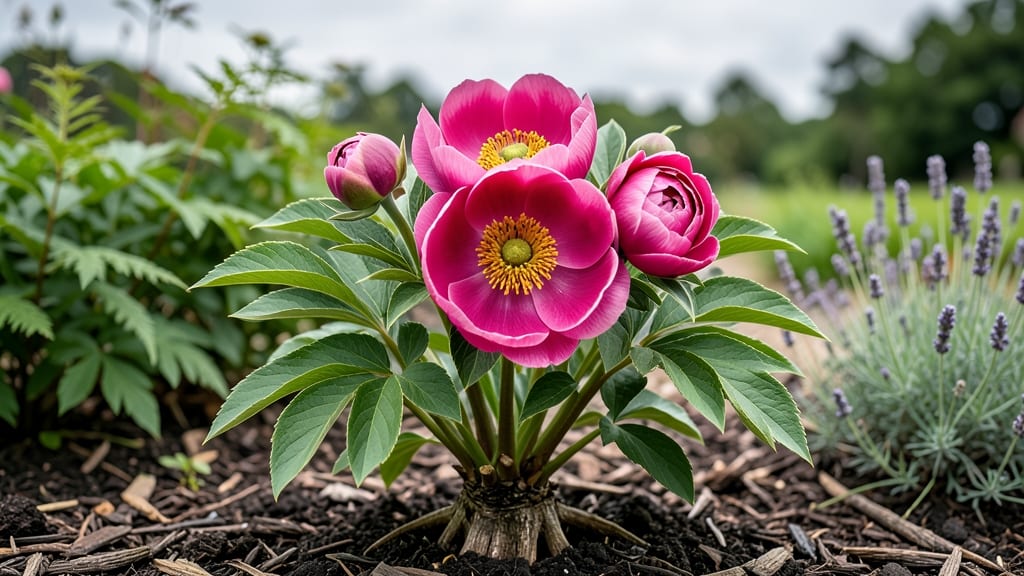
Peonies are perennial plants that return year after year, with their roots surviving winter dormancy to produce stunning blooms each spring. This die-back cycle actually proves their hardy, long-lived nature when cared for properly.
What sets peonies apart is their tuberous root system, which stores nutrients during winter and fuels regrowth when temperatures rise. 🌱 Unlike annuals that complete their life cycle in one season, peonies enter a natural dormancy period—dropping foliage but keeping their roots alive underground.
This biological strategy allows them to live for decades (some cultivars reach 100+ years!) when planted in well-draining soil and given proper winter protection. The key is understanding this cycle: their "death" above ground is just part of their survival strategy.
This perennial nature makes peonies one of the most rewarding garden plants. While they may look dormant in winter, their roots remain active below ground, preparing for next year's luxurious blooms.
The trade-off? They need patience—full maturity (and peak flowering) typically takes 2-3 years after planting. But once established, they become low-maintenance workhorses that multiply over time through natural division.
💡 In This Article
- How Peony Root Systems Ensure Decades of Blooms
- Pro Tips for Extending Peony Longevity in Gardens
How peony root systems ensure decades of blooms
The secret to peonies' remarkable longevity lies in their specialized tuberous root system, which functions like a biological battery. These thick, fleshy roots store carbohydrates, proteins, and nutrients during dormancy—similar to how a potato stores energy for sprouting.
Unlike woody perennials (like shrubs) that have persistent stems, peonies are herbaceous perennials, meaning their above-ground parts die back annually while their roots remain alive. This system allows them to survive harsh winters and regrow each spring with minimal energy loss.
During winter, peony roots enter a state called endodormancy, where growth is genetically suppressed by cold temperatures (typically below 40°F for at least 6-8 weeks). This cold period is crucial—it breaks dormancy in spring by triggering hormonal changes that restart growth.
Studies show that peonies in colder climates (USDA zones 3-8) often outlive those in mild winters because the cold requirement is fully met. The roots can even survive brief freezing (-20°F) thanks to their high sugar content, which acts as an antifreeze.
What makes peonies unique is their ability to self-divide over time. Each tuber produces new shoots and smaller tubers, creating a natural colony that expands annually. This process explains why a single peony plant can produce 5-10 stems after just 3-5 years—each stem supported by a network of interconnected roots.
Compare this to daylilies (another perennial), which rely on rhizomes that spread horizontally, or irises, whose roots divide more slowly. Peonies' vertical tuber growth gives them a competitive edge in nutrient access and stability.
The nutrient storage capacity of peony roots is nothing short of impressive. A mature peony tuber can store enough energy to produce 10-20 blooms per season, with each bloom requiring 2-3 grams of stored starch**.
This is why proper soil preparation matters—well-draining, loamy soil rich in organic matter (like compost) ensures the roots have access to moisture and nutrients year-round. Without this, the roots weaken, leading to fewer blooms or eventual decline.
Overcrowded roots also struggle to access nutrients, which is why division every 3-5 years is recommended.
Here's what happens when you see those first spring shoots: the roots have been quietly converting stored starches into sugars through a process called glycolysis, fueling rapid cell division. This is why peonies bloom so early—sometimes as early as late April in warm climates—before many other perennials even emerge.
The timing is genetically programmed to coincide with peak pollinator activity, ensuring successful reproduction. 🌸
One fascinating adaptation is peonies' ability to regulate their own dormancy based on environmental cues. Unlike some perennials that rely solely on temperature, peonies also respond to daylight changes. Shortening days in autumn trigger the production of abscisic acid, a hormone that signals the plant to prepare for dormancy.
This dual system (temperature + photoperiod) makes peonies incredibly resilient across different climates, from the Pacific Northwest's damp winters to the dry heat of the Southwest.