
Orchid Care
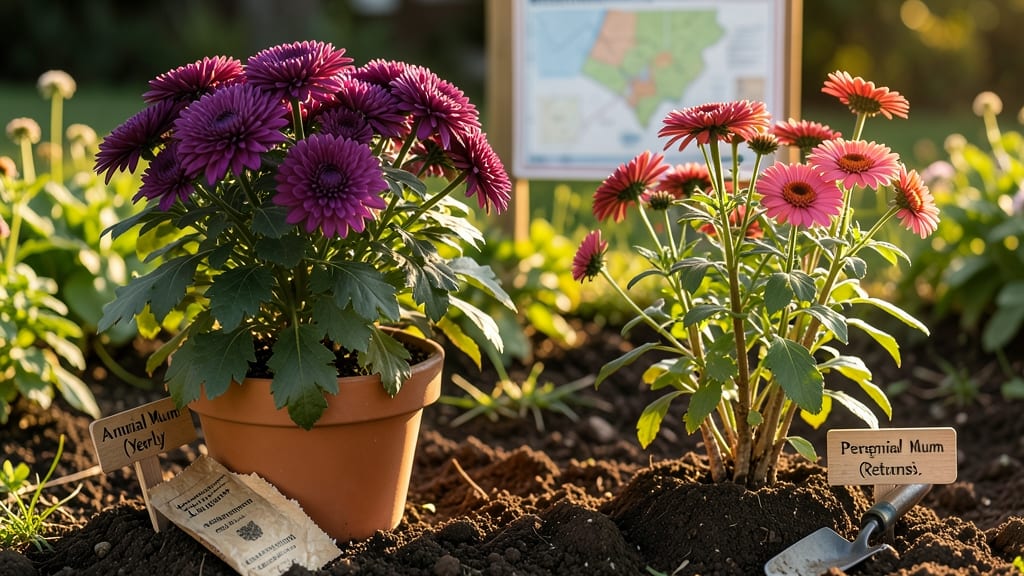
Whether mums are annuals or perennials depends on your climate: they’re perennials in USDA Zones 7-10 but treated as annuals in colder regions (Zones 1-6) because frost kills them back. Their longevity hinges on winter survival and post-bloom care.
Mums thrive as perennials in warmer climates where they regrow each spring, but their lifespan in colder areas is cut short by winter frost. 🌱 The key difference lies in their ability to enter dormancy—plants in Zones 7-10 naturally survive underground, while those in colder zones need human intervention (like mulching or container protection) to persist.
Many gardeners in frost-prone areas replant mums yearly because the roots often don’t withstand harsh winters without extra care.
For those in Zones 1-6, selecting hardier varieties like 'Autumn Joy' or 'Snowball' can improve survival odds, but even these benefit from late-season trimming and protective mulch.
The trade-off? With proper overwintering, you can extend their life beyond one season—though they’ll never match the reliability of their perennial cousins in milder climates.
💡 In This Article
- Mums’ Lifespan Explained: Perennial vs. Annual Growth Cycles
- How to Overwinter Mums in Cold Climates (Zones 1-6)
Mums’ lifespan explained: perennial vs. annual growth cycles
Mums (Chrysanthemum spp.) are botanically perennials in their native range, which includes East Asia and parts of Europe, where they naturally experience mild winters. In USDA Zones 7-10, these plants thrive as perennials because they develop deep root systems that survive winter dormancy.
The key mechanism is their ability to store energy in underground stems called corms, which remain dormant during cold months and regrow when temperatures rise above 50°F in spring.
In colder climates (Zones 1-6), the challenge lies in frost penetration. Mum roots typically survive down to 10-15°F, but extended sub-zero temperatures or heavy snow cover can damage them. The plant’s natural survival strategy—dormancy—revolves around carbohydrate reserves in the corms.
However, without proper insulation (like mulch), these reserves get depleted faster, leading to die-back. This is why gardeners in colder zones often treat mums as annuals: they focus on seasonal blooms rather than long-term survival.
The growth cycle difference is dramatic. In perennial zones, mums bloom in fall, then enter dormancy, only to push up fresh foliage by late spring. In annual zones, gardeners typically plant new tubers each spring, discarding old ones after frost kills them.
The trade-off? Perennial mums develop stronger root systems over years, while annual treatments require yearly replanting but offer more control over variety selection.
What most gardeners miss is that even in cold climates, mums can be perennials with the right care. The secret lies in late-season trimming—cutting back foliage to 2-3 inches before first frost—and applying a 4-6 inch layer of mulch (straw or leaves work best).
This mimics their natural dormancy conditions in warmer zones. Without this protection, the plant’s energy reserves get wasted maintaining above-ground growth during winter.
Consider this comparison: In Zone 8, a mum’s corm might survive 5+ years with proper care, while in Zone 5, even hardy varieties like 'Autumn Joy' typically last just 2-3 years without overwintering techniques.
The science is clear—dormancy success depends on protecting those underground storage organs from temperature fluctuations and moisture loss.
Here’s the bottom line: Mums are perennials by nature, but their lifespan as one depends entirely on your climate zone and winter preparation. In milder areas, they’re low-maintenance; in colder ones, they demand extra attention to survive.
The good news? With the right techniques, you can coax even Zone 1 mums to return year after year—it just takes understanding their biological limits.