
Plants
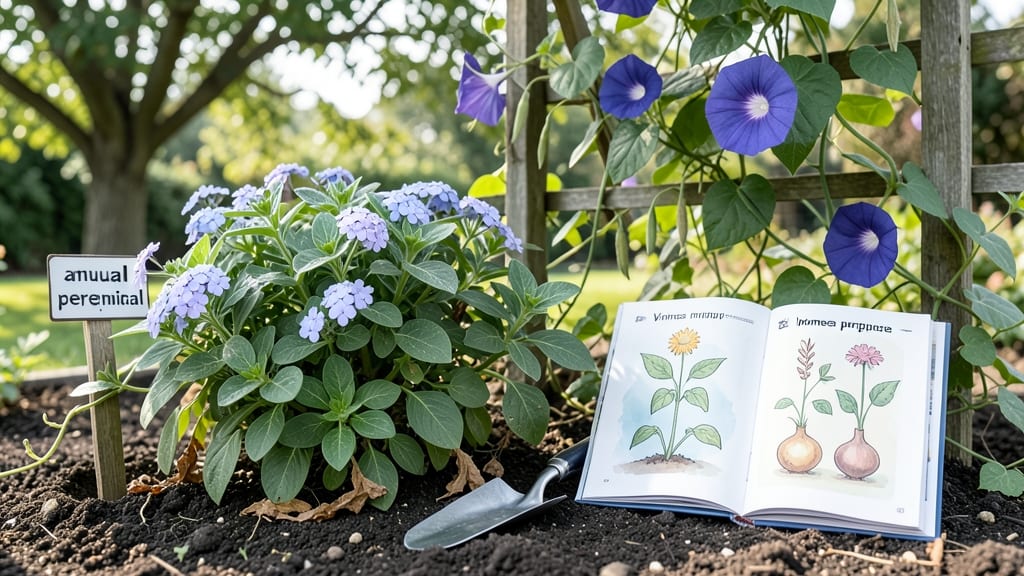
Morning glories aren't true perennials in most climates, but their underground tubers can regrow each spring in frost-free zones, creating a yearly return under ideal conditions.
Morning glories act like annuals in colder regions because their above-ground growth dies when temperatures drop. However, their tubers—thickened roots that store energy—remain dormant underground until conditions improve. 🌱 In warmer zones (like USDA 7-11), these tubers often survive winters, sending up new shoots when soil temperatures rise.
This behavior explains why they might "come back" year after year without being planted anew, though they're not classified as true perennials.
What sets morning glories apart is their ability to adapt: while true perennials regrow from established roots or crowns, morning glories rely on tuber survival. This makes them more resilient than many annuals but also means their "perennial-like" behavior depends entirely on climate protection.
Gardeners in marginal zones can extend this cycle by mulching heavily or planting tubers deeper.
💡 In This Article
- How Morning Glory Tubers Enable Yearly Regrowth
- Tips for Encouraging Morning Glories to Return Annually
How morning glory tubers enable yearly regrowth
Morning glory tubers function like nature's energy banks—thickened roots that store starches and nutrients to fuel regrowth. Unlike true perennials that regenerate from woody stems or crowns, morning glories rely on these tubers, which can swell to 1-2 inches in diameter when fully developed.
The tuber's outer layer hardens during dormancy, creating a protective barrier against freezing and desiccation, while the inner cells remain metabolically active at temperatures as low as 32°F.
The regrowth process begins when soil temperatures rise above 50°F, triggering hormonal signals that break dormancy. Buds along the tuber's surface begin dividing rapidly, forming new shoots within 2-3 weeks in optimal conditions.
This timing explains why morning glories often emerge before many true perennials—once the tubers sense consistent warmth, they prioritize shoot growth over leaf development to maximize sunlight capture during their short growing season.
What makes this system fascinating is the tuber's ability to compartmentalize damage. Even if 50-70% of the tuber is destroyed by frost or pests, the remaining healthy tissue can still regenerate a full plant. This resilience contrasts with true perennials like hostas, which require their entire crown to survive.
The trade-off? Morning glories allocate more energy to tuber production than to above-ground growth, which is why their vines grow so aggressively during their active season.
Light exposure also plays a crucial role in tuber formation. Morning glories produce more substantial tubers when planted in full sun (6-8 hours daily) compared to partial shade, where tubers remain smaller and less capable of surviving winter.
This explains why gardeners in Zone 8 often see more reliable regrowth than those in Zone 7—warmer winters combined with abundant sunlight create ideal conditions for tuber development.
Interestingly, morning glory tubers exhibit a phenomenon called "apomixis" in some varieties, where new plants can grow from unfertilized seeds produced by the tubers themselves. While not all morning glories display this trait, it contributes to their ability to spread and persist without human intervention.
This biological adaptation makes them more self-sustaining than many garden annuals, which must be replanted each season.
Understanding this tuber-based growth cycle helps explain why morning glories might "come back" year after year in certain climates—it's not true perennialism, but rather a sophisticated survival strategy that capitalizes on underground energy storage and precise environmental triggers. 🌱