
Plants
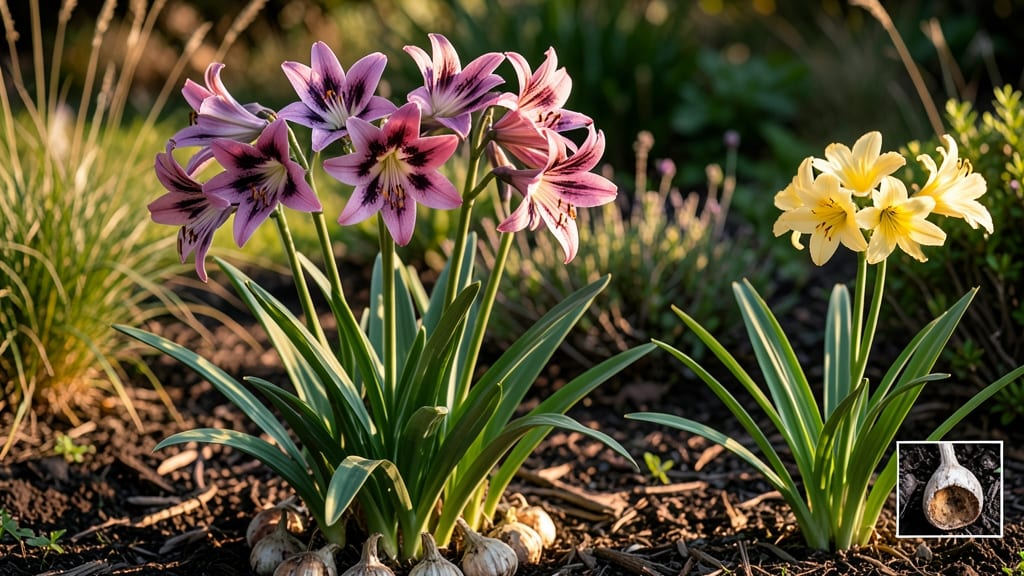
Yes, lily plants are perennials that regrow each year from their underground storage organs—whether bulbs or rhizomes—though bloom cycles and maturation timelines vary widely by variety. Some species deliver annual flowers, while others establish over multiple years or require seasonal dormancy.
This perennial nature means lilies aren't just one-year wonders—they store energy underground during off-seasons, then burst back with bold blooms when conditions are right. 🌸 The key difference between species lies in their root systems: true lilies (like Lilium varieties) rely on bulbs, while daylilies (Hemerocallis) use rhizomes.
Both systems let them survive harsh winters or dry spells, though some tropical lilies may need protection in colder climates.
What truly extends their lifespan is consistent care—think of it like giving them a long-term lease rather than a short-term stay. Proper soil drainage prevents bulb rot, while mulching in winter shields rhizomes from freezing.
I’ve seen Asiatic lilies return for 5-7 years with minimal intervention, while Stargazer lilies often need dividing every 3-4 years to prevent overcrowding. The secret? Mimicking their natural habitat as closely as possible.
💡 In This Article
- How Lily Plant Lifespan Differs by Species and Climate
- Essential Care Tips to Maximize Lily Plant Longevity
How lily plant lifespan differs by species and climate
The perennial nature of lilies stems from their specialized underground storage organs—either bulbs or rhizomes—which act like biological batteries. True lilies (genus Lilium) store nutrients in bulb-like structures, while daylilies (Hemerocallis) rely on thick rhizomes that spread horizontally.
These storage systems allow them to survive winter dormancy, a critical adaptation that defines their perennial lifecycle. During dormancy, metabolic activity slows dramatically, with bulbs reducing water content to 30-40% of their summer levels to prevent freezing damage.
Climate plays a pivotal role in determining how long lilies thrive. Hardy species like Asiatic lilies (zones 3-9) can withstand temperatures down to -30°F thanks to their thick bulb scales, while tropical varieties (Lilium longiflorum) need winter protection in zones colder than 10.
Sunlight exposure also affects blooming cycles—full sun (6+ hours daily) triggers stronger bulb development, while shade reduces flowering but extends leafy growth. Some species, like Martagon lilies, may take 3-5 years to mature enough to bloom, demonstrating how environmental factors regulate their lifespan.
The biological clock of lilies is tied to photoperiod—their response to daylight length. Short-day lilies (like Candidum types) bloom in late spring/early summer when days lengthen, while long-day varieties (such as Trumpet lilies) wait for summer's longest days. This adaptation ensures energy isn't wasted on flowers during unfavorable seasons.
What's fascinating is how some lilies, like Daylilies, produce multiple blooms per stem over 2-3 weeks, while others like Stargazer lilies focus all their energy on a single spectacular bloom per stem.
Seasonal dormancy isn't just about survival—it's a strategic energy conservation mechanism. During winter, lilies redirect resources from leaves to their storage organs, building up starch reserves that fuel next year's growth. This process explains why overwatering in fall can be deadly: excess moisture prevents proper dormancy and causes bulb rot.
The trade-off is clear—lilies that enter dormancy properly live longer, while those stressed by poor conditions may decline after just 2-3 years.
Consider the Lilium regale, a hybrid that combines hardiness with prolific blooming. In ideal conditions (well-drained soil, 6-8 hours of sun), it can produce 10-15 blooms per stem annually for 5+ years without division.
The contrast with Lilium lancifolium (Turk's Cap Lily) is striking—this species often blooms its first year but may take 3 years to reach peak vigor. These differences highlight how species-specific biology interacts with climate to determine a lily's true lifespan.
What most gardeners overlook is how microclimates within a yard can create ideal conditions for certain lilies. A north-facing border might protect tender species from afternoon sun, while a south-facing slope could extend the growing season for hardy varieties.
This localized adaptation is why some gardeners report 10-year-old lilies thriving in their specific conditions—what works in one zone may fail just 50 miles away due to subtle temperature or moisture differences.