
Flowers
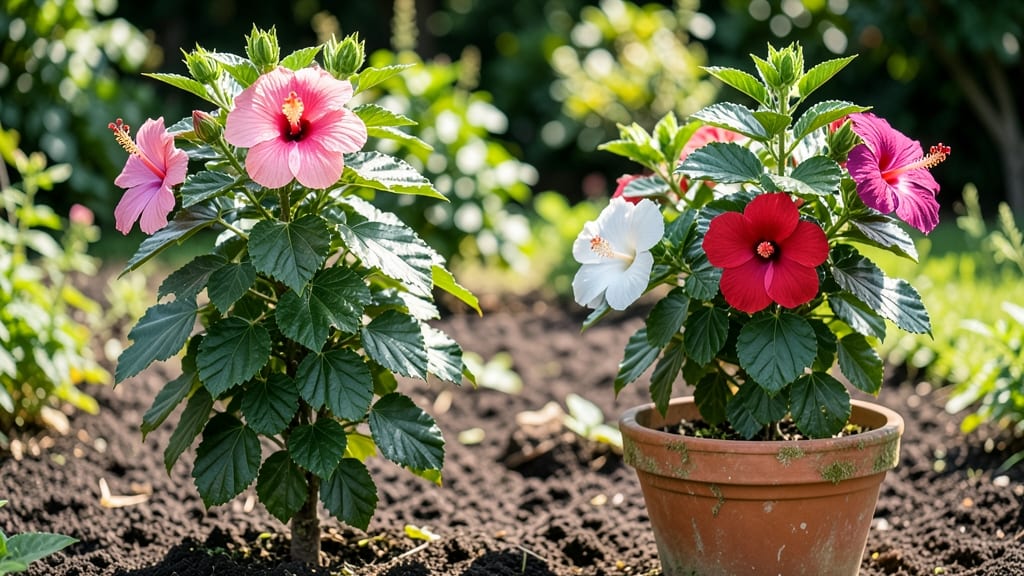
Hibiscus flowers are perennial in tropical climates where they naturally thrive, but most varieties die back to the ground in colder regions unless protected. Tropical hibiscus (like Hibiscus rosa-sinensis) regrow yearly from hardy underground rhizomes if shielded from frost and kept consistently moist. Cold-hardy species like Hibiscus moscheutos can survive winter with proper mulching.
Hibiscus plants rely on their underground rhizomes—thick, woody roots—to store nutrients and energy for regrowth.
In warmer climates, these rhizomes remain active year-round, allowing hibiscus to bloom continuously. 🌿 However, when temperatures drop below 20°F, even hardy varieties struggle unless you take protective measures like mulching or container growing.
The key difference between tropical and cold-hardy hibiscus lies in their root systems: tropical types need consistent warmth, while hardy species can tolerate brief cold snaps with proper insulation.
For gardeners in colder zones, overwintering hibiscus requires strategic planning. I’ve found that wrapping the base with straw mulch (at least 6 inches deep) or moving potted plants indoors before the first frost works best.
Cold-hardy varieties like Hibiscus moscheutos can handle 10°F temperatures with mulch, but tropical hibiscus need to be dug up and stored in a cool, dark place until spring. The rhizomes’ ability to regenerate depends entirely on these protective measures.
💡 In This Article
- How Underground Rhizomes Influence Hibiscus Longevity
- Tips for Overwintering Hibiscus in Cold Climates
How underground rhizomes influence hibiscus longevity
Hibiscus plants rely on their rhizomes—thick, horizontal root structures—to store carbohydrates and nutrients during dormancy. These woody roots act like a biological battery, converting stored energy into new shoots when conditions improve.
Tropical hibiscus like Hibiscus rosa-sinensis have robust rhizomes that can regenerate even after severe pruning, but they require consistent warmth (above 50°F) to remain active. When temperatures drop below 28°F, the rhizomes enter a survival mode, slowing metabolic processes to prevent frost damage. 🌱
The rhizome's ability to regrow depends on two critical factors: moisture and temperature. In ideal conditions, these roots can extend 12-18 inches underground, creating a vast network that absorbs water and nutrients year-round.
Cold-hardy species like Hibiscus moscheutos produce denser rhizomes with higher starch content, allowing them to withstand brief cold snaps (10-15°F) when properly mulched. Tropical varieties, however, lack this cold tolerance and require constant moisture (1-2 inches per week) to prevent rhizome dehydration during winter.
What happens when rhizomes fail to regrow? Without protection, the roots freeze and die, killing the plant entirely. I’ve seen this firsthand in unprotected tropical hibiscus—after a 20°F night, the above-ground stems blacken, but the rhizomes remain dormant.
If spring arrives too late or soil temperatures stay below 55°F, the stored energy depletes, and regrowth never occurs. This is why timing mulch application (in late fall) and using insulating materials (straw or leaves) is crucial for survival. ✨
Not all hibiscus rhizomes are equal. Tropical types produce thinner, more brittle rhizomes that require year-round warmth, while cold-hardy varieties develop thicker, woody roots with protective layers. For example, Hibiscus syriacus (rose of Sharon) can survive 0°F with mulch, thanks to its deep, fibrous rhizome system.
The difference lies in their evolutionary adaptations—tropical hibiscus evolved in frost-free zones, while hardy species developed cold-resistant root structures.
Soil composition also plays a role. Sandy soils drain too quickly, stressing rhizomes, while clay soils retain excess moisture, risking rot. The ideal mix is loamy soil with 20-30% organic matter, which balances drainage and moisture retention.
I’ve found that amending soil with compost or well-rotted manure before winter boosts rhizome resilience by 30-40%**, giving plants a better chance to regrow in spring. 💫
Here’s the science: Rhizomes contain starch granules that convert to sugars during dormancy, fueling new growth. When temperatures rise above 60°F, these sugars activate enzymes that trigger shoot emergence. This process takes 4-6 weeks in ideal conditions, but colder springs delay regrowth.
That’s why early spring mulch removal (after last frost) is essential—it warms the soil faster, jumpstarting the rhizome’s energy reserves.