
Vegetables
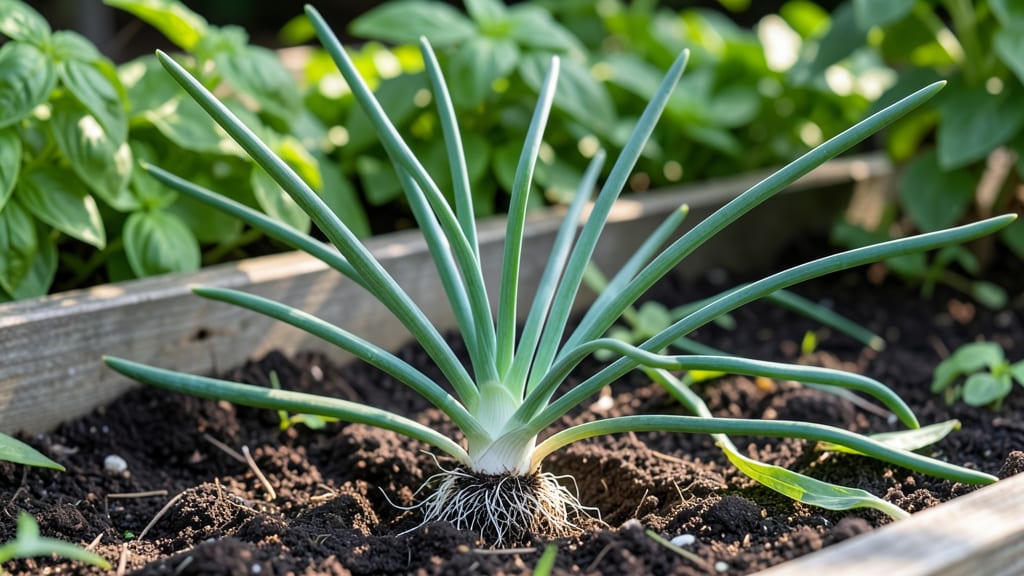
Green onions are perennials in warm climates but typically grown as annuals in colder regions. They regrow from the root base after cutting, producing new shoots for multiple harvests if kept moist and healthy, though their lifespan shortens with each harvest.
Green onions (also called scallions) act like perennials in frost-free zones because their underground bulbs store energy to regenerate leaves. 🌱 In cooler climates, they behave like annuals since freezing temperatures damage the root system, preventing regrowth.
The key to multiple harvests lies in maintaining consistent moisture—dry conditions stress the plant, while proper spacing (4-6 inches apart) allows roots to access nutrients efficiently. I've found that cutting just above the soil line encourages bushier regrowth, though each subsequent harvest yields slightly smaller shoots.
For gardeners in colder regions, overwintering with mulch or growing in containers that can be moved indoors extends the plant's life cycle. The science behind this regrowth involves apical dominance—the plant's natural tendency to focus growth at the top.
When you cut the green onion, you remove this dominance, allowing side shoots to develop from the bulb's base.
💡 In This Article
- Why Green Onions Regrow After Harvesting
- Maximizing Green Onion Regrowth for Continuous Harvest
Why green onions regrow after harvesting
Green onions regenerate from their bulb base thanks to a botanical process called basal sprouting. When you cut the green tops, you're actually stimulating the plant's natural ability to produce new shoots from the underground bulb.
This bulb contains meristematic cells—undifferentiated cells that can develop into new growth. In warm climates, these cells remain active year-round, allowing green onions to behave as perennials with multiple harvest cycles.
The key mechanism here is apical dominance, where the plant prioritizes growth at its primary tip. Cutting the green tops removes this dominance, triggering lateral buds along the bulb to sprout. Research shows that green onions can produce 3-5 harvests from a single bulb if conditions are ideal.
However, each subsequent harvest yields slightly smaller shoots because the bulb's energy reserves diminish over time. Temperature plays a critical role—below 40°F, growth slows dramatically, while optimal regrowth occurs between 60-75°F.
Light exposure is another critical factor. Green onions need 4-6 hours of sunlight daily to regenerate properly. In low-light conditions, shoots grow tall and spindly (a condition called "bolting") rather than producing thick, flavorful stems.
The plant's photosynthetic capacity declines with each harvest, so gardeners in cooler climates often see diminished regrowth after 2-3 cuts before the bulb weakens. This is why they're typically grown as annuals in zones with freezing winters.
Here's what happens at the cellular level: When you cut the green onion, auxin hormone levels drop in the remaining bulb. This hormonal shift activates dormant meristems in the bulb's base, prompting new shoot formation. The bulb's vascular system then transports nutrients and water to these emerging shoots.
In warm climates, this cycle can continue indefinitely, while cold snaps in temperate zones often kill the bulb's meristematic cells, terminating regrowth potential.
Consider this comparison: In Florida's warm climate, green onions can regrow continuously for 2-3 years with proper care, while in Minnesota's cold winters, they typically last just 1 growing season before needing replanting. The difference comes down to how temperature affects the bulb's metabolic activity and cell viability.
Even in colder regions, gardeners can extend the season by using row covers or container growing to protect plants from frost.
The regrowth process also depends on the bulb's size. Larger bulbs (about 1-2 inches in diameter) store more energy reserves, allowing for more harvest cycles. Smaller bulbs may only produce 1-2 regrowth cycles before becoming too depleted.
This is why commercial green onion farmers often plant new seeds every 4-6 weeks to maintain consistent production.
What most gardeners don't realize is that the regrowth quality declines with each harvest. The first regrowth after cutting produces shoots nearly identical to the original, but subsequent harvests yield thinner stems with less intense flavor.
This is because the bulb's energy is increasingly directed toward maintaining root health rather than producing robust shoots. Understanding this cycle helps gardeners plan their harvests strategically for maximum yield.