
Plants
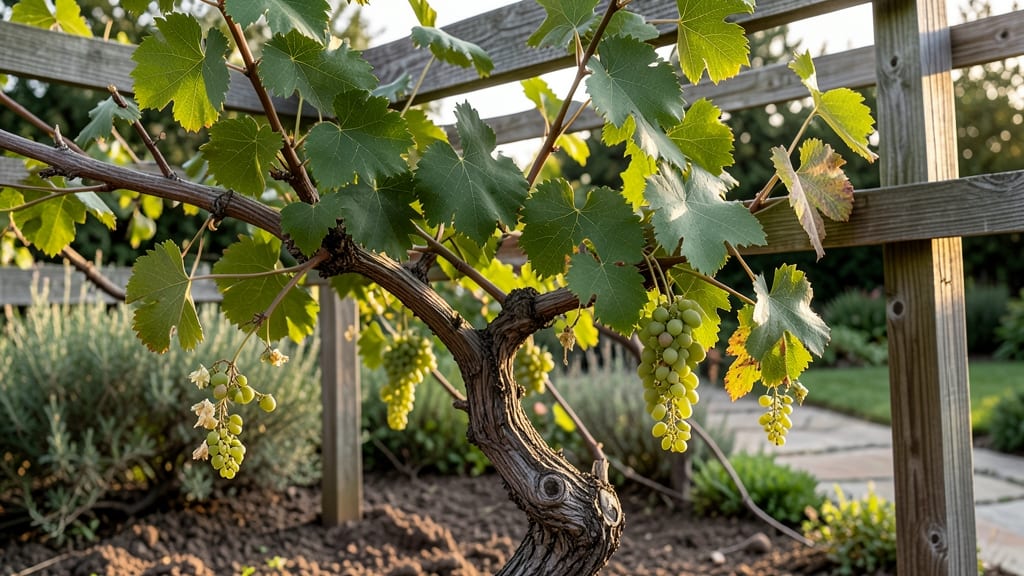
Grapes are perennial plants that regrow each year from their woody vines, entering dormancy in winter but surviving through cold seasons with proper care and pruning. Their lifespan can exceed decades with the right conditions.
Grapes are perennial because their woody vines store nutrients underground, allowing them to regrow each spring. This hardiness means they can live for 20-50 years with consistent care, but their success depends on winter chill hours—most varieties need 200-1,000 hours below 45°F to trigger bud formation.
Without this cold exposure, grapevines may produce fewer fruits or fail to thrive. 🌱 I’ve seen old vines in family gardens that still bear fruit after 30 years, proving their resilience when given proper attention.
What sets grapes apart from annual plants is their ability to reproduce vegetatively—meaning they grow new shoots from last year’s wood rather than starting from seed. This makes them ideal for home gardeners who want long-term harvests with minimal replanting.
The key to their longevity? Balancing pruning (to remove dead wood) with winter protection (like mulch or frost cloth) in colder climates.
💡 In This Article
- How Grapes Survive Winter Dormancy
- Maximizing Grapevine Longevity in Gardens
How grapes survive winter dormancy
The grapevine's survival strategy hinges on a biological process called endodormancy, where metabolic activity slows dramatically in response to shorter daylight and dropping temperatures. As autumn temperatures fall below 50°F, grapevines begin converting stored sugars into insoluble carbohydrates like starch, which accumulate in their woody stems and roots.
These reserves act like a natural battery, fueling regrowth when spring arrives. 🌱 What's fascinating is how this process requires 200-1,000 hours of chill below 45°F—a range that varies by variety—before buds can break dormancy in spring.
Moisture plays a critical role too. During dormancy, grapevines need just enough soil moisture to prevent desiccation but not so much that roots rot. The woody canes themselves contain specialized cells that prevent water loss, while the bark thickens to protect against freezing temperatures.
Some cold-hardy varieties like Concord can survive down to -20°F because their cells produce antifreeze proteins that lower the freezing point of their sap—similar to how fish in Arctic lakes survive sub-zero temperatures.
Pruning in late winter (dormant season) is where human intervention becomes crucial. By removing dead or diseased wood, you redirect the vine's energy toward producing new, healthy shoots from last year's buds.
This is why professional vineyards prune to keep only 2-4 buds per cane—it forces the plant to focus its resources on quality over quantity. Without proper pruning, grapevines can become overgrown and produce small, weak fruit clusters.
What most gardeners overlook is how light exposure affects dormancy. Grapevines need 6-8 hours of sunlight daily even in winter to maintain their photosynthetic capacity. In cloudy climates, supplemental lighting or choosing sun-loving varieties can make the difference between a vine that thrives and one that struggles.
The science here involves phytochrome pigments in the leaves that detect light levels and trigger hormonal changes for dormancy.
Consider this: A well-cared-for grapevine can store enough nutrients to support 5-10 years of growth without new planting. This is why old European vineyards often have vines over a century old—they've been meticulously managed through generations.
The key is mimicking nature's cycles: providing winter chill, protecting from extreme cold, and giving the plant time to rest before spring's regrowth.
For home gardeners, this means paying attention to your local climate. In warmer regions, grapevines might need artificial dormancy triggers like hydrogen cyanamide sprays to break dormancy if natural chill hours are insufficient.
The goal is always to align your care with the vine's natural biological rhythms—because when you do, you're rewarded with decades of fruit production. 🌿