
Plants
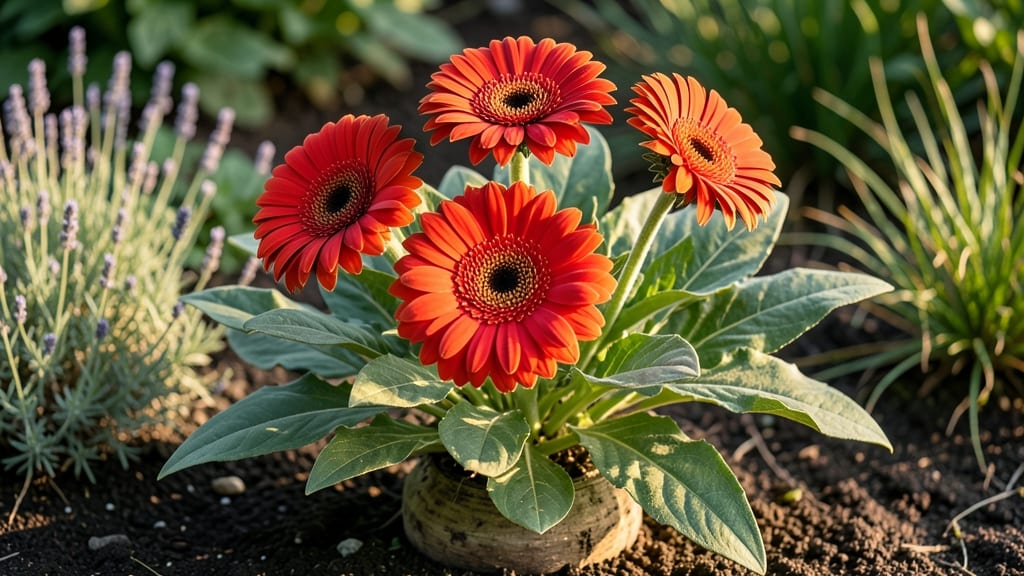
Gerbera daisies are not perennial plants in most regions—they behave like annuals, dying back to the ground each winter in cold climates (below USDA Zone 8) and regrowing from their root systems when spring arrives. Only in warmer zones (8+) do they sometimes persist as semi-perennials, though frost will still kill them back annually.
Gerbera daisies thrive as summer bloomers but struggle with freezing temperatures, which is why they don't qualify as true perennials in most gardens. 🌱 Their roots can survive mild winters in warmer zones, but the above-ground foliage and flowers freeze back completely when temperatures drop below 20°F.
This dieback cycle makes them behave like annuals, even though their root systems remain dormant and ready to regrow when conditions improve.
What sets them apart from true perennials (like hostas or daylilies) is their tropical origin—gerberas evolved in South Africa's warm climate, where they naturally experience dry winters and wet summers.
This adaptation explains why they need special care in colder regions, including digging up tubers before frost or providing greenhouse protection. The key is understanding their seasonal needs rather than assuming they'll return year after year like hardy perennials.
💡 In This Article
- Why Gerbera Daisies Act Like Annuals in Cold Climates
- How to Overwinter Gerbera Daisies in Chilly Zones
Why gerbera daisies act like annuals in cold climates
Gerbera daisies originate from South Africa's subtropical highlands, where they evolved to thrive in warm, dry climates with distinct wet summers. This tropical heritage explains their sensitivity to cold—when temperatures drop below 20°F, their above-ground stems and leaves freeze solid, while the root system remains dormant but alive.
Unlike true perennials (such as coneflowers or black-eyed Susans), which develop deep, insulating root systems and woody stems to survive winter, gerberas lack these adaptations. Their roots can only endure brief cold snaps, making them behave like annuals in colder zones.
The key difference lies in their root hardiness zone tolerance. While gerberas can survive mild winters in USDA Zones 8-11, their roots typically endure temperatures down to 15-20°F only if protected. In colder regions (Zones 7 and below), even well-established roots suffer damage when exposed to prolonged freezing.
This is why gardeners in these areas must treat them as seasonal plants—digging up tubers before frost or providing greenhouse protection. Their tropical nature also means they lack the cold-hardy growth habits of native temperate perennials.
What makes gerberas unique is their dieback-and-regrowth cycle. When spring arrives and soil temperatures rise above 55°F, their roots send up new shoots from dormant buds, creating the illusion of perennial behavior. However, this regrowth depends entirely on the roots surviving winter intact.
In contrast, true perennials like peonies or lavender develop specialized underground storage organs (rhizomes or tubers) that can withstand years of freeze-thaw cycles without damage. Gerberas simply don't have this level of cold resistance.
Consider this comparison: A coneflower (Echinacea), a true perennial, can handle -20°F winters because its roots are protected by insulating soil and fibrous growth. A gerbera in the same conditions would suffer 90%+ foliage loss and might not recover at all.
Their vibrant blooms and lush foliage make them popular, but this tropical nature comes with cold-weather limitations that gardeners must account for. 🌡️
Even in warmer zones where gerberas might persist year-round, they still experience annual dieback during cold snaps. The difference is that their roots have a better chance of survival in Zone 8+ climates, allowing them to regrow more reliably.
This semi-perennial behavior is why some gardeners in these areas treat them as "short-lived perennials"—they'll return for several years if conditions remain favorable, but a single hard frost can reset their lifecycle entirely.
One fascinating aspect is how gerberas handle their dormant phase. Unlike true perennials that remain metabolically active underground, gerberas enter a state of physiological dormancy, where their root systems slow nearly to a stop.
This adaptation helps them conserve energy during dry winters, but it also makes them extremely vulnerable to freeze damage. When spring arrives, their roots require consistent moisture and warmth to break dormancy and produce new growth—a process that can fail if winter was too severe.