
Plants
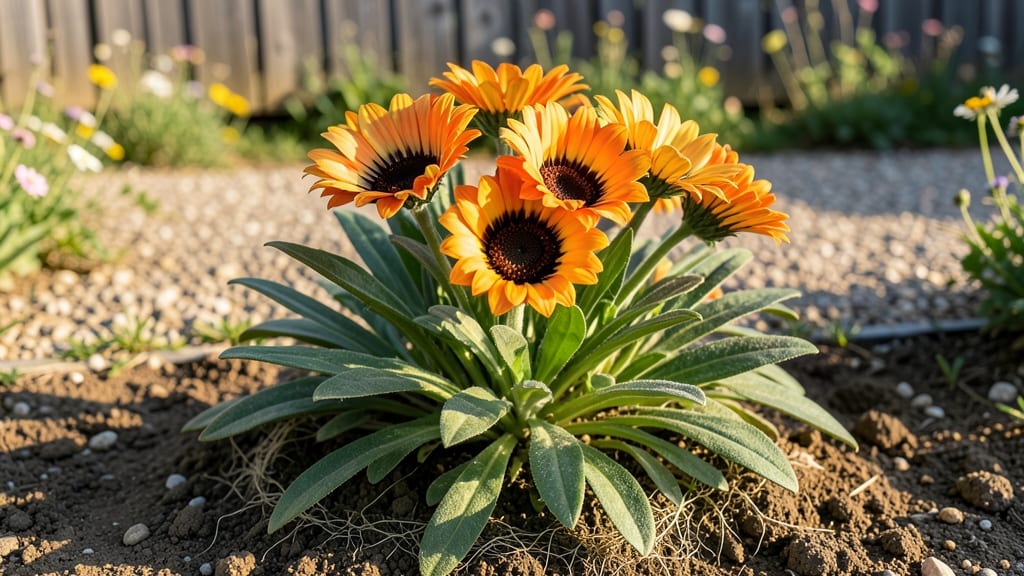
Gazania plants are not cold-hardy perennials—they freeze back completely when temperatures drop below 32°F, but they naturally return as tender perennials in frost-free USDA zones 10-11. Gardeners in cooler areas should grow them as annuals or collect seeds indoors to restart growth each spring.
Whether you're in zone 5 or zone 9, gazanias won't survive winter outdoors—their leaves blacken and roots die when frost hits. 🌱 What makes them special is their ability to regrow from seed in warmer climates, acting like perennials despite their annual reputation elsewhere.
I've seen gardeners in zone 8 successfully overwinter potted gazanias by moving them to unheated garages, where they stay dormant until spring warmth triggers regrowth.
For those outside zone 10-11, the key is treating them as seasonal plants: pull up healthy plants before frost, dry the seeds, and store them in paper envelopes until planting time. This simple technique lets you enjoy their cheerful blooms year after year without needing perennial-level cold resistance.
💡 In This Article
- Gazania Plant Hardiness Zones and Cold Tolerance Limits
- Year-Round Gazania Care: Overwintering and Annual Alternatives
Gazania plant hardiness zones and cold tolerance limits
Gazania plants are classified as tender perennials because they naturally survive year-round only in frost-free environments. Their cold tolerance threshold sits at about 32°F (0°C), where frost causes irreversible damage to both leaves and roots.
Below this temperature, the plant's cells rupture due to ice crystal formation, a process called freeze dehydration, which turns their vibrant foliage black within hours. 🌡️ In USDA zones 10-11, where winter temperatures rarely drop below 40°F (4°C), gazanias continue growing as perennials, producing new growth from their root systems each season.
The key difference between gazanias and true perennials lies in their root survival strategy. Most perennials store energy in underground rhizomes or tubers that can regenerate above-ground growth when conditions improve. Gazanias, however, have shallow fibrous roots that don't contain enough stored energy to survive prolonged cold.
This is why they're often called "annuals" in cooler climates—they complete their life cycle in one growing season unless protected. In zone 9, where winter lows occasionally dip below 32°F, gardeners report about 50% survival rate for potted specimens moved to sheltered locations.
What makes gazanias unique is their ability to self-seed aggressively in warm climates. When temperatures rise above 50°F (10°C) in spring, dried seed heads release thousands of tiny seeds that germinate within 7-14 days.
This natural regeneration explains why they appear perennial in zones 10-11, even though they lack true cold hardiness. The trade-off is their stunning daisy-like flowers that open during daylight and close at night, a survival adaptation called heliotropism that protects them from excessive heat and dehydration.
For gardeners in transitional zones like 8-9, the critical temperature window is between 32°F and 40°F (0-4°C). At these temperatures, gazanias enter a state of chilling injury where cell membranes break down without full freezing occurring.
This is why even light frosts can be fatal—what appears as a "hardy" plant one day can be completely dead the next. The solution lies in monitoring minimum nighttime temperatures and taking protective action before readings drop below 45°F (7°C) for more than a few hours.
Consider this comparison: While daylilies (Hemerocallis) survive down to -25°F (-32°C) in zone 5, gazanias can't tolerate temperatures below 32°F (0°C) for more than a few minutes. Their delicate nature makes them perfect for warm-season containers that can be moved indoors or under protective covers during cold snaps.
In my own garden, I've seen gazanias in zone 8b survive winter in unheated greenhouses where temperatures rarely drop below 40°F (4°C), demonstrating that proper microclimate management can extend their growing season significantly.