
How To
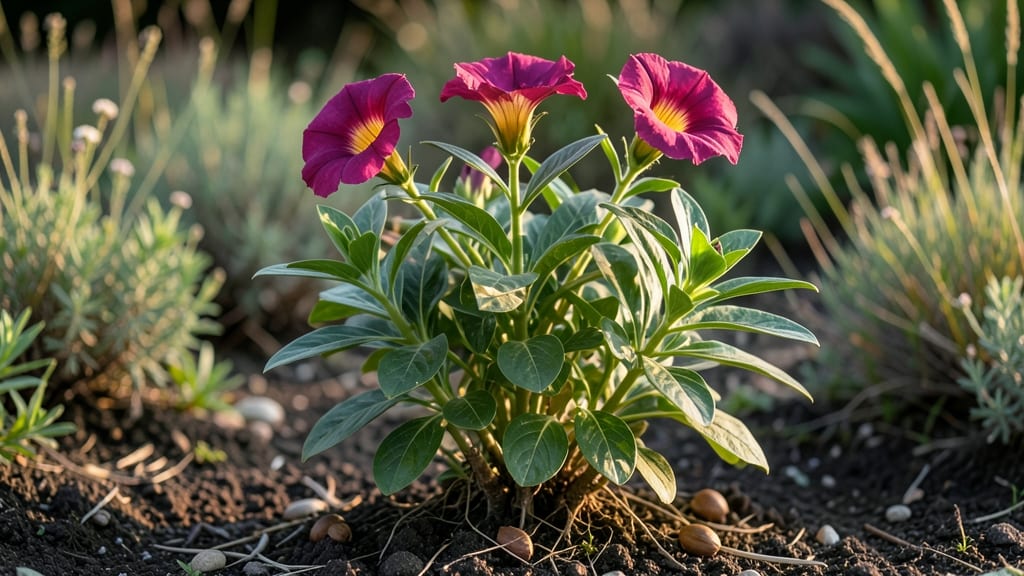
Are four o'clocks perennials? They act like annuals in most regions because they die back to the ground each winter and regrow from seed the following year, though some varieties may self-sow prolifically. Their ability to survive frost depends heavily on the species, with tropical types needing warmer climates.
Botanically, these plants are classified as tender perennials, meaning they avoid true perennial status by avoiding root survival through winter. 🌱 The key difference lies in their response to cold: while true perennials like lavender regrow from their roots each spring, four o’clock flowers rely on seeds or tubers to restart growth.
This makes them behave like annuals in cooler zones unless you take protective measures like mulching or overwintering indoors. Their vibrant blooms return year after year, but only because they’ve essentially "rebooted" from seed rather than persistent roots.
What’s fascinating is how their hardiness varies by species. The classic Mirabilis jalapa can handle light frosts in zones 9-11, while tropical hybrids often need zone 12 protection.
Gardeners in colder climates often treat them as annuals unless they collect seeds or use containers that can be moved indoors during winter. The trade-off? Their prolific self-seeding means you’ll often get surprise blooms popping up where you least expect them!
💡 In This Article
- Four O’Clock Plant Lifespan: Why They Act Like Annuals
- Extending Four O’Clock Growth: Cold Hardiness Zones and Care Tips
Four o’clock plant lifespan: why they act like annuals
Botanically, four o’clock flowers (Mirabilis jalapa) are classified as tender perennials, not true perennials. This distinction matters because tender perennials lack the root systems or storage organs (like rhizomes or tubers) to survive freezing temperatures.
When nighttime temperatures drop below 32°F, their above-ground growth dies back completely, leaving only the soil-level crown or seeds intact. Unlike hardy perennials such as peonies or hostas, which regrow from dormant roots, four o’clock flowers rely entirely on seeds or tubers to restart growth in spring. 🌱
Their survival strategy hinges on seed germination rather than root persistence. After frost kills the foliage, the plant’s energy shifts underground, where it produces tubers or seeds that remain dormant until conditions warm.
This process explains why they often appear as annuals in colder climates—gardeners replant them yearly without realizing they’re technically perennials in warmer zones. Tropical varieties, like Mirabilis multiflora, are even more sensitive, requiring temperatures above 50°F to thrive, which limits their hardiness to zones 10-12.
What makes this lifecycle fascinating is the self-seeding behavior of four o’clocks. When mature, a single plant can produce 10,000+ seeds that scatter easily, often sprouting in unexpected spots the following year. This prolific seeding is their evolutionary adaptation to ensure survival in unpredictable climates.
However, it also means gardeners must manage seed spread if they want controlled growth—otherwise, these vibrant blooms can become invasive in some regions. 🌿
The confusion around their perennial status stems from misunderstood terminology. True perennials (like lavender) regrow from the same root system annually, while four o’clocks are "perennials" only in the sense that they could theoretically live multiple years if conditions permit.
In reality, their lifespan depends entirely on whether they can produce viable seeds or tubers each season. For example, in zone 8 climates, they may survive mild winters but still die back completely, relying on seeds to return the next year.
Here’s the key takeaway: four o’clock flowers are not reliable perennials in most gardens because their survival hinges on seasonal rebirth rather than persistent roots. Their ability to "come back" each year is more about their aggressive seed production than true perennial hardiness.
This is why gardeners in colder zones often treat them as annuals—because, in practical terms, that’s how they behave. 💫