
Plants
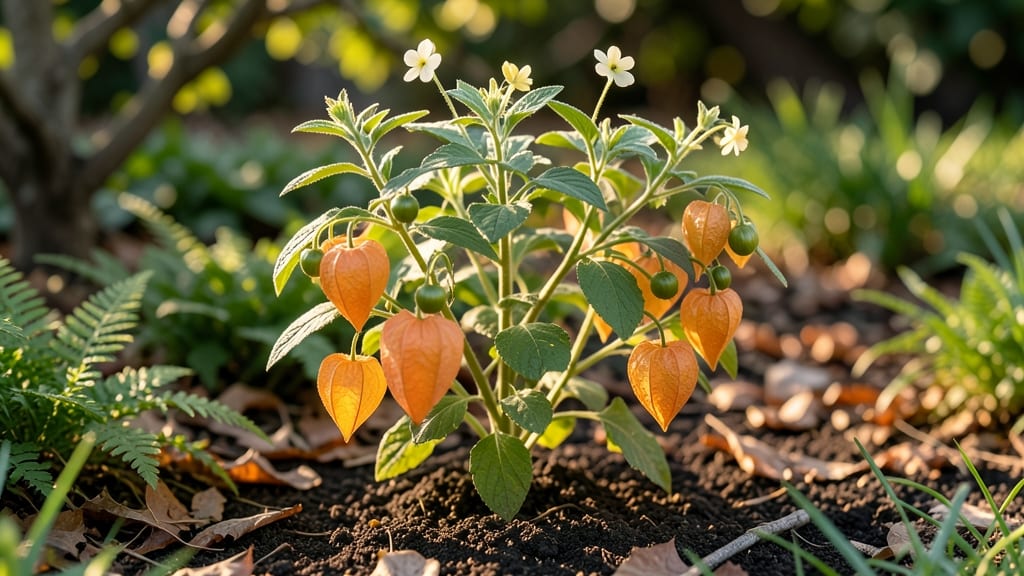
Chinese lantern plants (Physalis alkekengi) are perennials in USDA zones 3-8, meaning they'll regrow each year from their roots—but gardeners often treat them as annuals because their foliage dies back completely in winter. Those iconic orange lanterns actually persist on the plant long after the leaves turn black, and with proper protection, they'll bounce back in spring.
These hardy plants survive winter through underground tubers that store energy, though they go completely dormant when temperatures drop below 20°F (-7°C). 🌱 The blackened foliage isn't dead—it's just entering hibernation mode.
In colder zones (3-5), you'll need to mulch heavily with straw or leaves to insulate the roots, while zones 6-8 often see natural regrowth without extra protection. What's fascinating is how these plants use their lanterns as a survival strategy—the fruit protects the seeds while they wait for warmer weather.
The key to treating them as perennials lies in proper winter care. Cut back the dead stems in late winter (after the last frost), then apply a thick layer of mulch to shield the tubers from freezing.
In containers, move them to an unheated garage or basement where temperatures stay above freezing. With this approach, you'll get that same dramatic display of orange lanterns year after year—though it might take a few weeks for new growth to emerge in spring.
💡 In This Article
- Why Chinese Lanterns Die Back in Winter
- Protecting Chinese Lanterns Through Winter: Mulching and Pruning Tips
Why Chinese lanterns die back in winter
The dramatic winter dieback of Chinese lanterns (Physalis alkekengi) happens because these plants are dormant perennials, not true annuals. Their above-ground growth shuts down when temperatures drop below 20°F (-7°C), but the real magic happens underground.
These plants store energy in thick, potato-like tubers that can survive freezing temperatures down to -15°F (-26°C) when properly insulated. The foliage blackening you see isn't death—it's a protective mechanism where chlorophyll breaks down and leaves become brittle to prevent water loss.
What's fascinating is how this process varies by USDA zone. In zones 6-8, plants often survive winter with minimal protection because soil temperatures rarely drop below 20°F (-7°C) for extended periods. However, in zones 3-5, the risk of -10°F (-23°C) or colder triggers complete dormancy.
The tubers enter a state similar to hibernation, where metabolic activity slows to nearly zero while maintaining just enough energy to regrow when conditions improve. This is why you'll sometimes see Chinese lanterns resprouting in early spring before other perennials.
The orange lantern fruit plays an unexpected role in this survival strategy. These papery husks protect the seeds inside from moisture and pests during winter, acting as natural insulation.
Studies show that seeds inside intact lanterns maintain 90% viability after six months in freezing conditions, while exposed seeds lose viability rapidly. This dual-purpose structure explains why you'll often see these lanterns persisting on bare stems long after the leaves have fallen.
Here's what's actually happening at the cellular level: when temperatures drop, the plant's growth hormones (like gibberellins) decrease while stress hormones (abscisic acid) increase. This hormonal shift triggers the formation of protective compounds in the tubers, including sugars that act as natural antifreeze.
The blackened foliage isn't dead—it's in a state of senescence, where the plant systematically recycles nutrients back into the tubers before the leaves fall completely.
Zone-specific behavior reveals interesting patterns. In zone 3, where winters are harshest, Chinese lanterns often need 12+ inches of mulch to survive, while zone 8 plants might only require 3-4 inches.
The key difference lies in how quickly soil temperatures fluctuate—colder climates experience more extreme temperature swings that can damage emerging growth in early spring. This is why gardeners in colder zones sometimes see delayed regrowth compared to warmer areas.
What most people don't realize is that the timing of dieback is actually an adaptive strategy. Chinese lanterns typically enter dormancy 4-6 weeks before the first hard freeze, giving them time to complete nutrient translocation from leaves to tubers.
This preemptive shutdown explains why you'll often see plants looking healthy one week and completely blackened the next—it's not disease, but rather the plant's built-in survival mechanism kicking in.