
Flowers
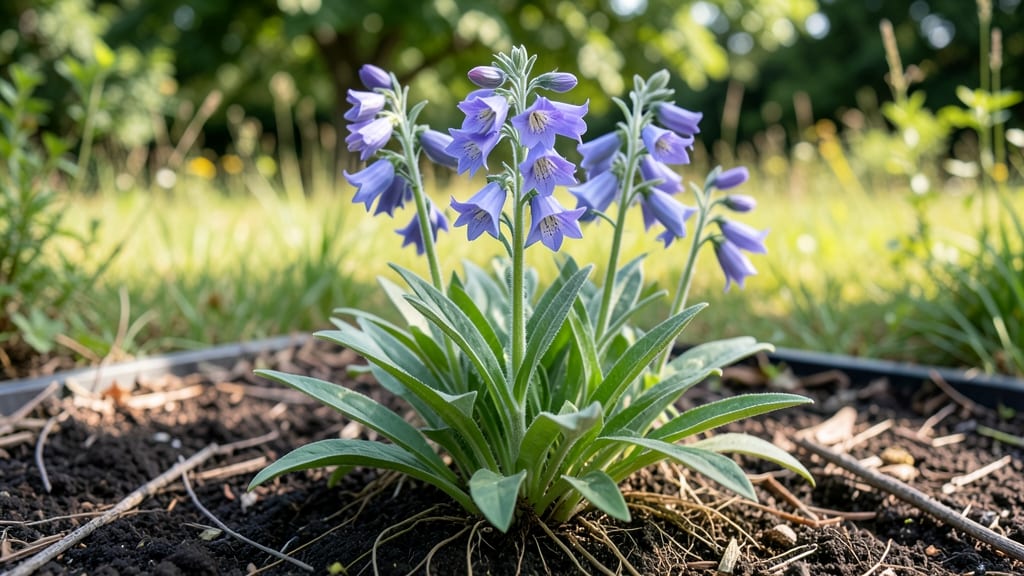
Canterbury bells aren't true perennials—they act like hardy biennials or short-lived perennials, dying back completely each winter before reshooting from seed or self-sown offsets in spring. Their remarkable cold hardiness and fast regrowth earn them a "perennial-like" reputation in most gardens.
This unique life cycle explains why gardeners often confuse them with true perennials. 🌱 Unlike classic perennials that maintain their foliage year-round, Canterbury bells go completely dormant in winter, only to burst back with vibrant blooms the following season.
The key difference lies in their reproductive strategy—they rely heavily on self-seeding rather than persistent root systems. In practice, this means you'll often see new plants popping up where old ones faded, creating natural clusters that return annually with minimal effort.
What makes them particularly resilient is their ability to thrive in USDA zones 3-9, handling frost and even light snow. This cold tolerance, combined with their two-year life span (biennial) or occasional three-year cycles (short-lived perennial), gives them the staying power most gardeners associate with perennials.
The trade-off? They may not live as long as true perennials like hostas or daylilies, but their dramatic seasonal transformation more than makes up for it.
💡 In This Article
- Why Canterbury Bells Die Back but Return Yearly
- How to Extend Canterbury Bells’ Lifespan in Gardens
Why Canterbury bells die back but return yearly
Canterbury bells (Campanula persicifolia) follow a biennial growth pattern, meaning they complete their life cycle in two years rather than living indefinitely like true perennials. In their first year, they focus on building a strong root system and basal leaves, storing energy for the next stage.
By their second spring, they allocate resources to flowering and seed production before dying back entirely—this is why they appear to vanish after blooming. 🌱 The confusion arises because their seeds germinate readily in fall or early spring, creating new plants that emerge where the old ones faded, giving the illusion of perennial behavior.
Cold temperatures actually trigger this cycle. When nighttime temperatures drop below 40°F in autumn, the plants enter dormancy, halting growth until spring. This cold requirement is why they thrive in USDA zones 3-9: the freeze-thaw cycles break seed dormancy while hardening the remaining roots.
Unlike true perennials that maintain above-ground growth through winter, Canterbury bells rely on this annual reset to rebloom with fresh vigor each season. Their stems contain high levels of starches that convert to sugars during dormancy, fueling rapid regrowth when conditions warm.
The key difference from perennials lies in their reproductive strategy. True perennials like peonies or lavender develop woody stems or extensive root systems that persist year-round. Canterbury bells, however, prioritize seed production over structural longevity—this is why you'll often see dense clusters of new plants where old ones disappeared.
Their seeds can remain viable in soil for up to three years, creating a self-sustaining cycle that mimics perennial behavior without the underlying biology. This adaptation explains why they're so reliable in cottage gardens despite their technical classification.
What most gardeners don't realize is how this cycle benefits their appearance. The complete dieback prevents disease buildup in stems (common in true perennials) while the fresh annual growth produces more uniform, vibrant blooms. The trade-off? Without intervention, their lifespan rarely exceeds three years—after which seed production declines.
This is why experienced gardeners use techniques like deadheading or strategic mulching to coax extra seasons from individual plants. The result is a garden that looks perpetually fresh, even though each generation technically lives just two years. 💫
Consider this comparison: A true perennial like hosta might live 20+ years with gradual growth, while Canterbury bells deliver two years of dramatic blooms before resetting. The visual impact is similar—reliable annual color—but the underlying biology couldn't be more different.
This is why botanists classify them separately: their life strategy prioritizes quantity of blooms over longevity of the individual plant.
Their cold tolerance also plays a crucial role in this cycle. Research shows that Canterbury bells require 30-60 days of temperatures below 50°F to properly vernalize (trigger flowering). Without this cold period, they may produce fewer blooms or revert to a leafy growth phase.
This explains why they sometimes struggle in mild-winter regions (zones 9-10) unless given artificial chilling or planted in high-altitude gardens where natural cold snaps occur.