
Vegetables
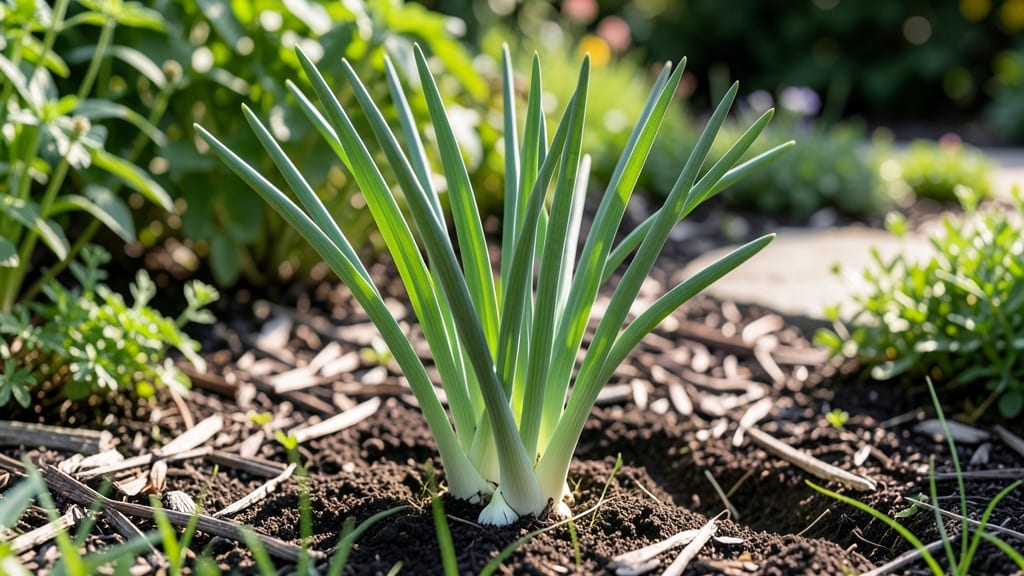
Bunching onions aren't true perennials—they act like biennials or short-lived perennials, dying back in winter but regrowing from their base each spring if conditions are right. Their longevity varies by climate and care, with some lasting several years before full decline.
Bunching onions go dormant in cold weather, but their roots stay alive underground, ready to push new growth when temperatures warm. 🌱 Unlike true perennials like chives, which send up leaves from the same crown year after year, bunching onions often produce a single flush of green before going dormant again.
The key difference is their leaf structure—bunching onions grow in clusters rather than from a single base, which affects how they handle winter. In milder climates, you might see them regrow reliably for 3-5 years, while harsher winters can shorten their lifespan significantly.
What many gardeners don't realize is that bunching onions often "die back" to the ground level rather than completely disappearing. The part above soil may turn brown and crispy, but the root system remains viable—this is why they can bounce back so well when spring arrives.
The challenge is distinguishing between true dormancy and actual plant death, which is why proper winter care makes all the difference.
💡 In This Article
- Why Bunching Onions Die Back and Regrow Each Season
- Extending Bunching Onion Lifespan Through Gardening Practices
Why bunching onions die back and regrow each season
The winter dieback of bunching onions is a survival mechanism triggered by cold temperatures. When nighttime temps drop below 40°F, the plant's meristematic cells (growth points) at the base enter dormancy, halting leaf production.
Unlike true perennials like chives, which maintain active growth centers year-round, bunching onions prioritize root survival over above-ground growth. Their fibrous root system stores carbohydrates during the growing season, which fuels regrowth when conditions improve.
What's fascinating is how the leaf structure changes during this cycle. Bunching onions produce hollow, cylindrical leaves that form tight clusters - this design helps them conserve moisture and energy.
When cold hits, these leaves senesce (age and die) from the bottom up, often turning brown and papery while the base remains green.
The roots, meanwhile, stay alive underground, maintaining a 5-10% moisture reserve that prevents complete desiccation. 🌱 In milder climates, this cycle repeats annually, while harsher winters may force true decline after 2-3 years.
The regrowth process begins when soil temperatures reach 50°F consistently. New shoots emerge from the basal plate (the flat, white tissue at the onion's base), using stored nutrients to produce fresh leaves.
This is why you'll often see bunching onions come back thicker than before - they're compensating for lost growth. The key difference from true perennials is that bunching onions don't have specialized underground storage organs like bulbs or rhizomes; their survival depends entirely on this root carbohydrate reserve.
Light plays a crucial role too. Bunching onions are day-neutral plants, meaning they don't require specific light conditions to trigger dormancy. Instead, the temperature drop acts as the primary signal.
This explains why they often survive in containers - the root system can maintain its moisture balance even in smaller soil volumes. The trade-off is that container-grown bunching onions typically have shorter lifespans (1-2 years) compared to in-ground plants (3-5 years) due to limited root expansion.
One common misconception is that bunching onions "die" in winter when they actually enter a state of suspended animation. The brown, crispy tops you see in spring are simply dead leaf material that can be easily trimmed away.
What remains is the living basal plate and root system, which can produce new growth for 2-3 weeks after dormancy if conditions are right. This rapid recovery is what makes them such reliable garden plants compared to true perennials that may take months to regenerate.
Consider this comparison: while chives (true perennials) maintain active growth centers throughout winter, bunching onions go into a deeper dormancy state. Their leaves turn brown and brittle, but the roots remain metabolically active, ready to respond to warmth.
This biological strategy allows them to survive in a wider range of climates than true perennials, though at the cost of shorter individual leaf lifespan. 🌿