
Plants
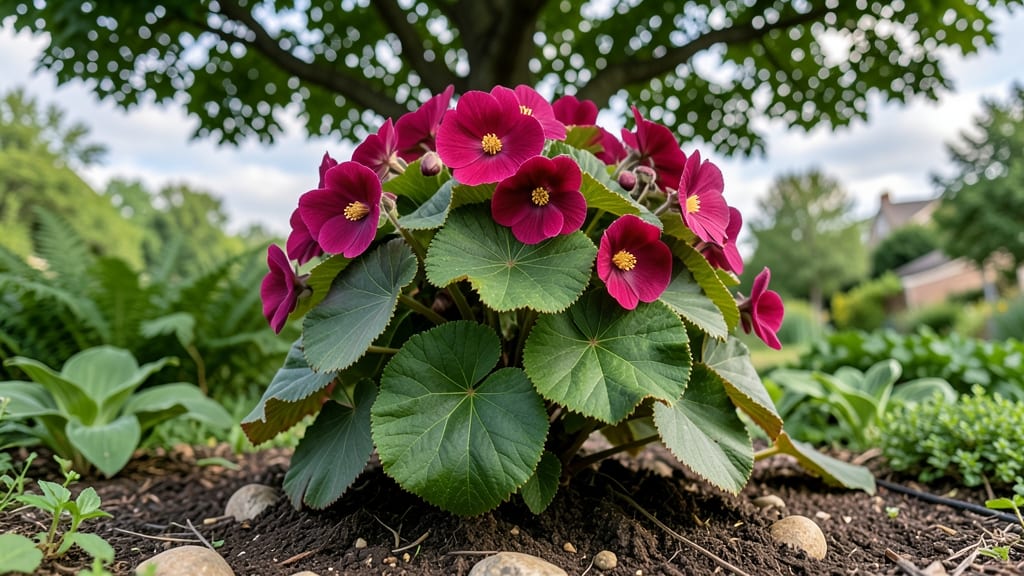
Begonias behave as perennials only in frost-free growing zones 10-12, where they naturally return each spring. Most varieties, however, succumb to frost when temperatures dip below 40°F, forcing gardeners in colder regions to treat them as annuals or take special overwintering measures.
Begonias' perennial status depends entirely on your climate zone. 🌱 In warm regions like Florida or Southern California, these plants thrive year-round, producing new growth from their tuberous roots each spring. But in colder areas, their delicate stems and shallow root systems can't withstand freezing temperatures, causing irreversible damage.
The good news? With proper indoor care, you can extend their lifespan beyond a single season by mimicking their natural tropical environment during winter months.
For gardeners in zones 5-9, overwintering begonias indoors becomes essential. This involves pruning back foliage, repotting into smaller containers, and providing bright indirect light to prevent leggy growth. Maintaining humidity levels between 40-50% and keeping temperatures above 50°F helps prevent dormancy-related issues.
When spring arrives, you'll be rewarded with vibrant new growth that rivals what you'd get from starting fresh each year.
💡 In This Article
- Begonia Cold Hardiness: Why Most Varieties Freeze Out
- How to Overwinter Begonias in Cold Climates
Begonia cold hardiness: why most varieties freeze out
Begonias' sensitivity to cold stems from their tropical origins and delicate biological structure. Their stems contain minimal vascular tissue designed for warm climates, making them unable to transport water efficiently in freezing temperatures.
When exposed to 32°F or below, cellular membranes rupture due to ice crystal formation, causing irreversible damage within 1-2 hours. This explains why even a light frost can kill most varieties overnight.
The root systems add another layer of vulnerability. Begonias develop shallow, fibrous roots that struggle to anchor in cold soil. When temperatures drop below 40°F, these roots become dormant or die back completely.
Some hardy species like Begonia grandis can tolerate brief exposure to 30°F, but their foliage typically blackens and falls off, requiring complete regrowth in spring. 🌱 The contrast with true perennials like hostas—whose thick rhizomes survive -20°F—highlights begonias' tropical nature.
Water content plays a critical role too. Begonia leaves contain 80-85% moisture, which expands when frozen, tearing cell walls apart. This is why even a 35°F night can cause leaf drop or stem rot.
The few cold-tolerant species (like Begonia coccinea) have thicker cuticles and slower growth rates, but they still require protection from prolonged cold. In frost-free zones (10-12), these plants naturally regenerate from tuberous roots each spring, explaining their perennial behavior.
Light exposure also affects cold tolerance. Begonias grown in full sun develop slightly thicker stems through increased lignin production, but this adaptation only provides marginal protection against frost.
The real difference comes from root insulation—plants in well-drained soil with organic matter fare better than those in compacted ground, as the mulch layer can maintain 5-10°F warmer temperatures near the roots during cold snaps.
What most gardeners overlook is the role of humidity. Tropical begonias thrive in 60-70% relative humidity, and when this drops below 40% during winter, their leaves become more susceptible to frost damage. The combination of dry air and cold creates ideal conditions for cellular dehydration, accelerating the freezing process.
This is why indoor overwintering requires careful humidity control—mimicking their native tropical environment prevents the physiological shock that kills outdoor plants.
Consider these key factors when evaluating cold tolerance:
- Stem thickness: Thicker stems (0.5cm+) survive slightly better than delicate 0.2cm stems
- Root depth: Deeper roots (>15cm) handle brief cold better than shallow systems
- Growth rate: Slow-growing varieties regenerate faster after frost damage
- Leaf waxiness: Glossy leaves resist moisture loss better than matte varieties
The bottom line? Begonias' perennial nature is climate-dependent. In frost-free zones, they naturally cycle through dormancy and regrowth. But in colder regions, their biological limitations make them behave more like annuals unless you intervene with proper overwintering techniques. 💫