
Plants
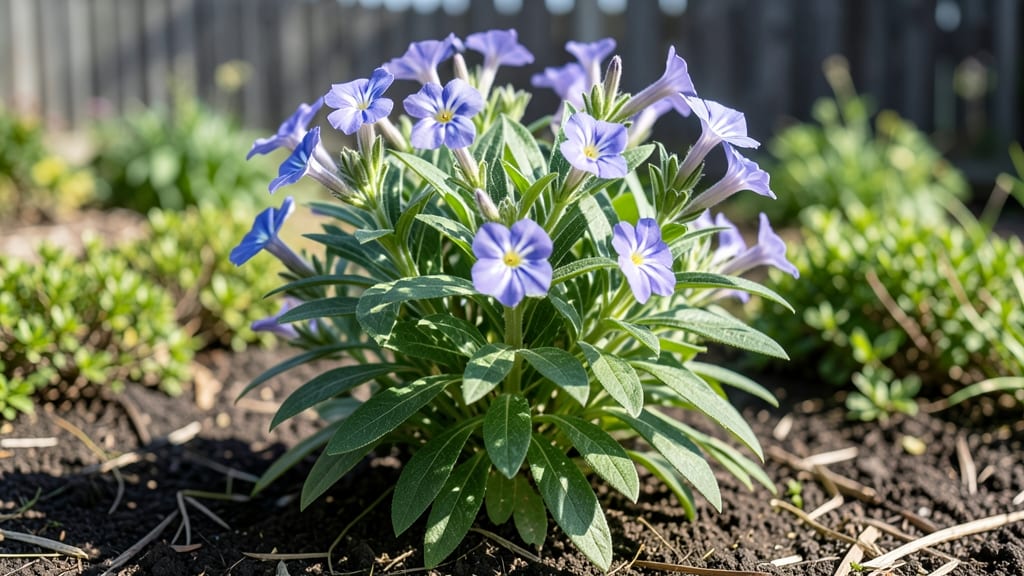
Determining whether an angelonia plant is perennial depends on your climate—most varieties are annuals in colder regions, though some can survive mild winters with protection. Check your USDA zone: angelonias only reliably return outdoors in zones 9-11, while colder areas require overwintering strategies like container storage or mulching.
Angelonia's tropical origins explain why it struggles in frost—its delicate foliage freezes at 32°F, causing irreversible damage. 🌱 Unlike hardy perennials, angelonias have shallow roots that can't insulate against cold snaps, which is why gardeners in zones 8 and below typically treat them as seasonal plants.
The good news? With proper winter care, you can coax regrowth year after year, even in marginal climates.
For example, moving potted angelonias to a garage or basement before first frost lets them survive dormancy, while heavy mulching (6+ inches of straw) can protect in-ground plants down to zone 8. The key is monitoring leaf color—yellowing or wilting signals it's time to act before damage becomes permanent.
💡 In This Article
- Angelonia’s Cold Tolerance: Zone Limits and Growth Habits
- Winter Care Strategies for Angelonia in Cold Climates
Angelonia’s cold tolerance: zone limits and growth habits
Angelonia’s struggle with cold stems from its tropical roots—this plant evolved in South America’s warm climates where temperatures rarely dip below 50°F. Its cellular structure lacks the protective adaptations of hardy perennials, like thick bark or deep root systems.
When frost hits 32°F, ice crystals form in the plant’s thin leaves and stems, rupturing cell walls and causing irreversible damage. 🌱 Unlike perennials that enter true dormancy, angelonias simply shut down, often looking dead until spring warmth returns.
The USDA zone map becomes your best friend here: angelonias thrive outdoors only in zones 9-11, where winter lows rarely drop below 20°F. In zone 8, you might get lucky with mild winters, but expect leaf scorch below 28°F.
The real divide occurs at zone 7—here, even a single 25°F night can kill exposed plants. What’s fascinating is how quickly damage occurs: just 2-3 hours below 30°F can trigger irreversible cell death in the foliage.
This tropical nature explains why angelonias grow so vigorously in summer—they’re adapted to rapid growth during warm seasons. Their shallow root systems (typically only 12-18 inches deep) can’t store enough energy for winter survival, unlike perennials with deep taproots.
The trade-off? Angelonias reward gardeners with 6-8 weeks of continuous blooming in ideal conditions, making them worth the winter effort for dedicated growers. 🌿
What’s often misunderstood is that angelonias aren’t completely helpless—they can survive brief cold snaps if protected. The key threshold is 28°F: above this, they might survive with protection; below it, even mulched plants risk damage.
This is why zone 8 gardeners often treat them as "semi-perennials"—they might return if winter stays mild, but it’s not guaranteed. The plant’s ability to regrow from the base (rather than true dormancy) makes it behave more like a tender perennial than a true hardy one.
Consider this comparison: a zone 9 angelonia might grow 2-3 feet tall with minimal care, while a zone 6 plant in a pot would need 10+ hours of winter darkness to simulate dormancy.
The science shows that light exposure during winter actually prevents proper rest, which is why indoor overwintering requires careful light management. This tropical-perennial hybrid behavior is what makes angelonias so fascinating—and challenging—to grow outside their native range. ✨
The most critical factor isn’t just the temperature, but how quickly it drops. Angelonias can handle slow cooling to 40°F, but a sudden 30°F plunge causes instant stress.
This is why gardeners in marginal zones often use row covers or cold frames—these create microclimates that slow temperature changes, giving the plant a fighting chance. Understanding this "rate of temperature change" concept is what separates successful angelonia overwintering from failed attempts. 💫