
Orchid Care
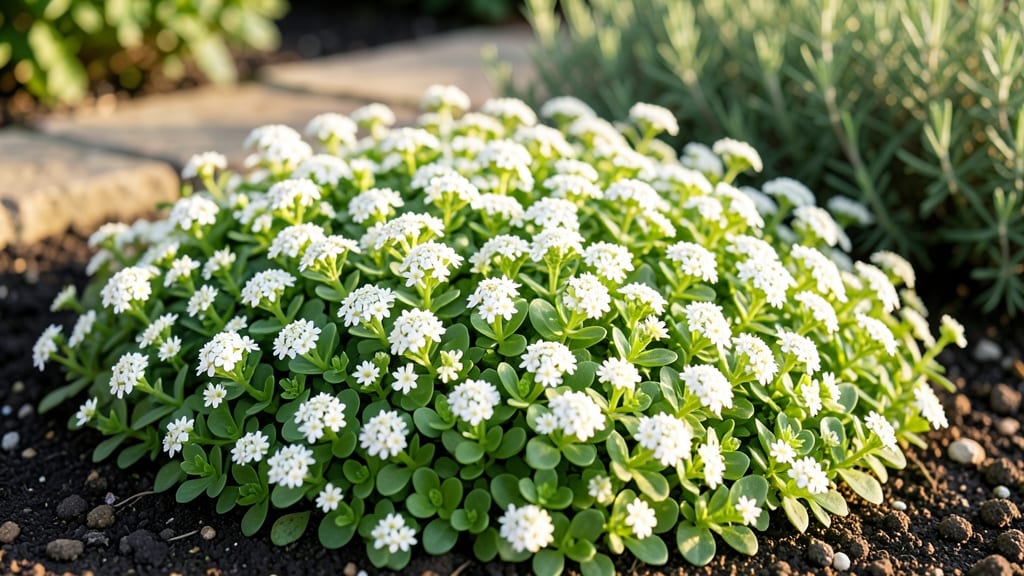
Alyssum 'Carpet of Snow' functions as a cool-season annual in most regions, though its tendency to self-seed prolifically can make it act like a short-lived perennial in milder climates. This hardy ground cover thrives in spring and fall, offering frost resistance and repeated blooms.
Alyssum 'Carpet of Snow' behaves differently depending on your climate zone. In colder regions (like USDA Zones 5-6), it completes its lifecycle as an annual, dying back when summer heat arrives.
However, in warmer areas (Zones 7-10), it often self-seeds aggressively, creating new plants that may persist for 1-2 years before fading. This makes it act like a short-lived perennial—not quite annual, not quite perennial, but somewhere in between.
The key to keeping it blooming is understanding its natural growth rhythm and providing the right care during its active seasons. 🌱
What many gardeners love about this variety is how it reblooms prolifically when given proper conditions. The tiny white flowers create a stunning carpet effect, especially when planted in mass. To extend its display, deadhead spent blooms regularly and ensure well-draining soil.
In hotter climates, providing afternoon shade can prevent early dormancy. The plant's ability to self-seed means you'll often get free replacements, making it a low-maintenance choice for seasonal color. The trade-off? In colder zones, you'll need to replant each spring to maintain continuous coverage.
💡 In This Article
- Why Alyssum 'Carpet of Snow' Dies Back in Heat
- How to Extend Alyssum Blooms Year-Round
Why Alyssum 'carpet of Snow' dies back in heat
Alyssum 'Carpet of Snow' follows a strict cool-season growth pattern because its native Mediterranean ancestors evolved to thrive in winter-wet, summer-dry climates. When temperatures rise above 85°F (29°C), the plant's metabolic processes shift dramatically.
The tiny leaves, covered in fine hairs, lose moisture rapidly through transpiration, while the shallow root system struggles to extract water from dry soil. This creates a perfect storm of dehydration stress that triggers dormancy—even if the plant isn't dead, it essentially "shuts down" to conserve energy.
The plant's thermoperiodic response is what makes it act like an annual in most regions. Studies show that when nighttime temperatures consistently stay above 70°F (21°C) for more than 2 weeks, the plant's apical meristems (growth points) cease production of new flowers and leaves.
In USDA Zones 7-10, where summer heat persists, this dormancy period can last 3-5 months, while in cooler Zones 5-6, the entire plant may wither within 4-6 weeks of summer's arrival.
The white flowers you love are actually a survival adaptation—they reflect sunlight to prevent overheating during its active growing seasons.
What's fascinating is how this plant uses chemical dormancy triggers. When exposed to prolonged heat, Alyssum produces higher levels of abscisic acid (ABA), a plant hormone that signals water stress. This hormone accumulation causes the plant to drop leaves, reduce photosynthesis, and redirect resources to its roots and seeds.
The result? A plant that looks dead but may still produce seed pods containing 100-200 tiny seeds per pod, ready to self-sow for next season's display. This is why you often see new plants appearing the following spring—nature's built-in insurance policy against summer's harshness. 🌡️
Climate zone plays a crucial role in determining whether your Alyssum acts as an annual or short-lived perennial. In Zones 7-10, where winters are mild, the plant may survive 1-2 years before succumbing to heat stress, while in Zones 3-6, it completes its entire lifecycle in one season.
The key difference lies in winter temperatures: Alyssum can tolerate light frosts down to 20°F (-7°C), but it's the summer heat that ultimately determines its lifespan. Even in perennial climates, the plant won't reliably return year after year unless you provide consistent summer shade or irrigation.
Here's what happens at the cellular level during heat stress: The plant's chloroplasts (where photosynthesis occurs) become damaged when temperatures exceed 90°F (32°C), reducing their ability to produce energy. Meanwhile, the plant's stomata (pores) close to prevent water loss, which also stops gas exchange needed for growth.
This dual stress response explains why Alyssum looks so vibrant in spring but wilts so quickly when summer arrives—it's not just about water, but about the fundamental breakdown of its energy production systems. 🌿
For gardeners in transitional climates (like Zone 7b), the solution often lies in creating microclimates. Planting Alyssum in areas with 3-4 hours of afternoon shade during peak summer can extend its blooming season by 4-6 weeks.
The secret is maintaining soil moisture at 40-50% field capacity—any lower and the plant's roots can't access enough water to sustain photosynthesis. Mulching with 1-2 inches of organic matter helps maintain this moisture level while keeping root temperatures cooler.
What most gardeners don't realize is that Alyssum's dormancy isn't permanent—it's a survival strategy. The plant's seeds remain viable in the soil for 2-3 years, waiting for cooler conditions to germinate. This is why you'll often see volunteer plants appearing in spring without any intervention.
The key to maintaining continuous color is understanding this natural cycle and working with it rather than against it.
In hotter climates, consider planting Alyssum in containers that can be moved to shaded areas during summer months—this can turn what would be an annual into a perennial display with proper care. 🌱